
Regenerative Agriculture
Promoting Sustainable Farming for Food Security and Livelihoods
Overview
Sustainable Farming Practices
The Regenerative Agriculture Program aims to equip individuals and communities with sustainable farming practices that improve food security, diversify incomes, and enhance resilience to climate and economic shocks. By integrating permaculture, market-oriented farming, and community-based approaches, the program empowers participants, particularly women, to create sustainable agricultural systems that benefit both their households and communities.
The Challenge
Agriculture remains the primary livelihood for over 80% of the population in areas like Wakiso. However, challenges such as soil degradation, limited access to quality inputs, and poor market linkages continue to hinder productivity and income generation. Climate change exacerbates these challenges, with erratic weather patterns, droughts, and floods threatening food security.
Women, who make up the majority of smallholder farmers, face additional barriers, including limited access to land, agricultural inputs, and training opportunities. This inequality not only limits productivity but also affects household nutrition and overall well-being.
Moreover, farming practices that rely on unsustainable techniques deplete natural resources, further reducing agricultural yields and resilience. Without interventions that promote sustainable and market-oriented farming practices, communities will remain trapped in cycles of poverty and food insecurity.
Our Approach
In-House and Outreach Training:
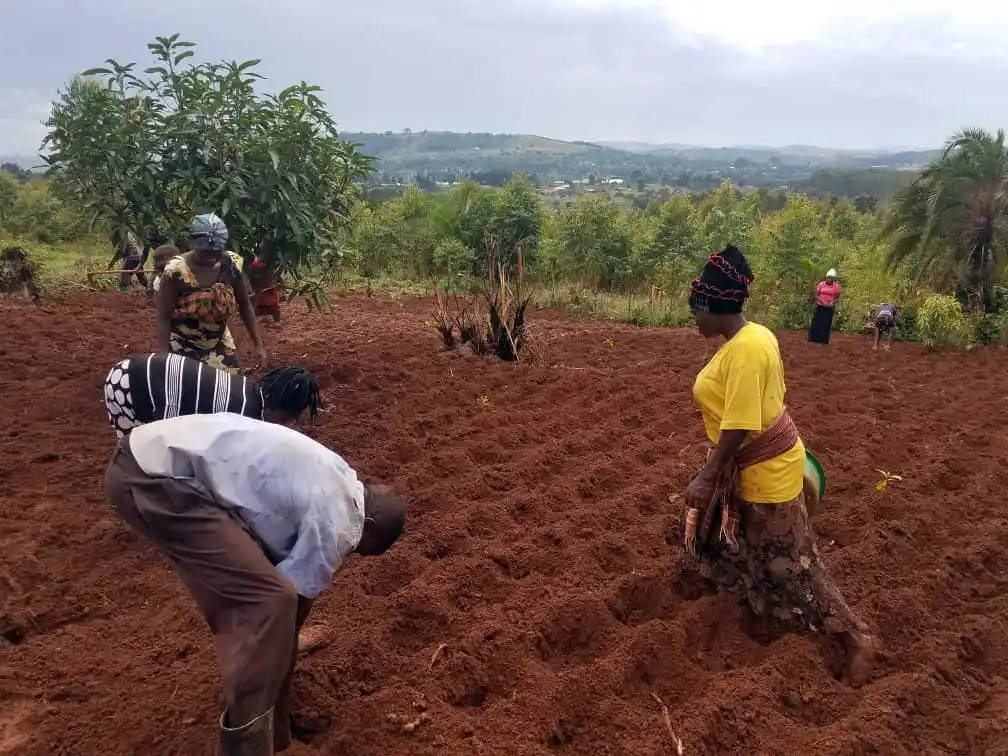
The program trains beneficiaries in regenerative agriculture techniques, such as permaculture and agroecology, to enhance soil health, increase yields, and promote sustainability. These trainings are conducted both on-site and within communities to maximize reach and impact.
Demonstration Plots for Learning:
SCSO establishes demonstration plots as practical learning sites for permaculture and sustainable farming. These plots provide hands-on experience and showcase innovative practices that can be replicated by farmers in their fields.
Market-Oriented Farming and Linkages:
To ensure farming is both productive and profitable, the program identifies key value chains and supports farmers in accessing quality inputs like seeds. Additionally, it establishes linkages to reliable markets, helping farmers maximize the value of their produce.
Women Farmers Associations:
The program focuses on empowering women by forming and strengthening women farmers’ associations. These structures provide platforms for shared learning, collective action, and access to resources and support.
Exchange Visits for Continuous Improvement:
Farmers participate in exchange visits to learn from peers and other successful agricultural projects. This exposure enhances their knowledge, encourages innovation, and builds a sense of community.
Our Solution
The Regenerative Agriculture Program delivers sustainable farming solutions through:
- Training: Practical, hands-on sessions on regenerative farming techniques, targeting both individuals and communities.
- Demonstration Plots: On-site learning hubs for best practices in permaculture and sustainable agriculture.
- Market Support: Access to quality inputs and market linkages for increased profitability.
- Community Structures: Formation of women farmers’ associations for collective empowerment and resource sharing.
- Knowledge Sharing: Exchange visits for inspiration and adoption of new ideas.
Why Your Support Matters
Investing in the Regenerative Agriculture Program means supporting:
- Sustainable Solutions: Empowering farmers with techniques that regenerate the environment while increasing productivity.
- Community Empowerment: Building the capacity of women and marginalized groups to lead agricultural innovation.
- Resilience Building: Helping communities adapt to climate change and economic challenges through diversified farming practices.
Your support can transform communities by fostering self-reliance, improving nutrition, and creating lasting opportunities for agricultural success.
Outcomes and Impact
- Enhanced food security at household and community levels through improved agricultural practices.
- Diversified and improved household nutrition, contributing to better health and well-being.
- Increased resilience to climate-related and economic shocks through sustainable farming techniques.
- Empowered women farmers with access to resources, knowledge, and supportive networks.
This program aligns with global and national agricultural and development goals:
Global Agenda:
- Contributes to SDG 1 (No Poverty) and SDG 2 (Zero Hunger) by promoting sustainable farming practices and enhancing household incomes.
- Strengthens resilience to climate change, supporting efforts to mitigate its impact on vulnerable populations.
Uganda’s Strategy:
- Advances the National Development Plan III’s focus on increasing agricultural productivity and market access.
- Aligns with Uganda’s Vision 2040 goal of transforming agriculture into a profitable and sustainable sector.
Impact
- Communities experience reduced hunger and improved food security due to regenerative farming practices.
- Women farmers become key contributors to household and community livelihoods through empowered associations and market linkages.